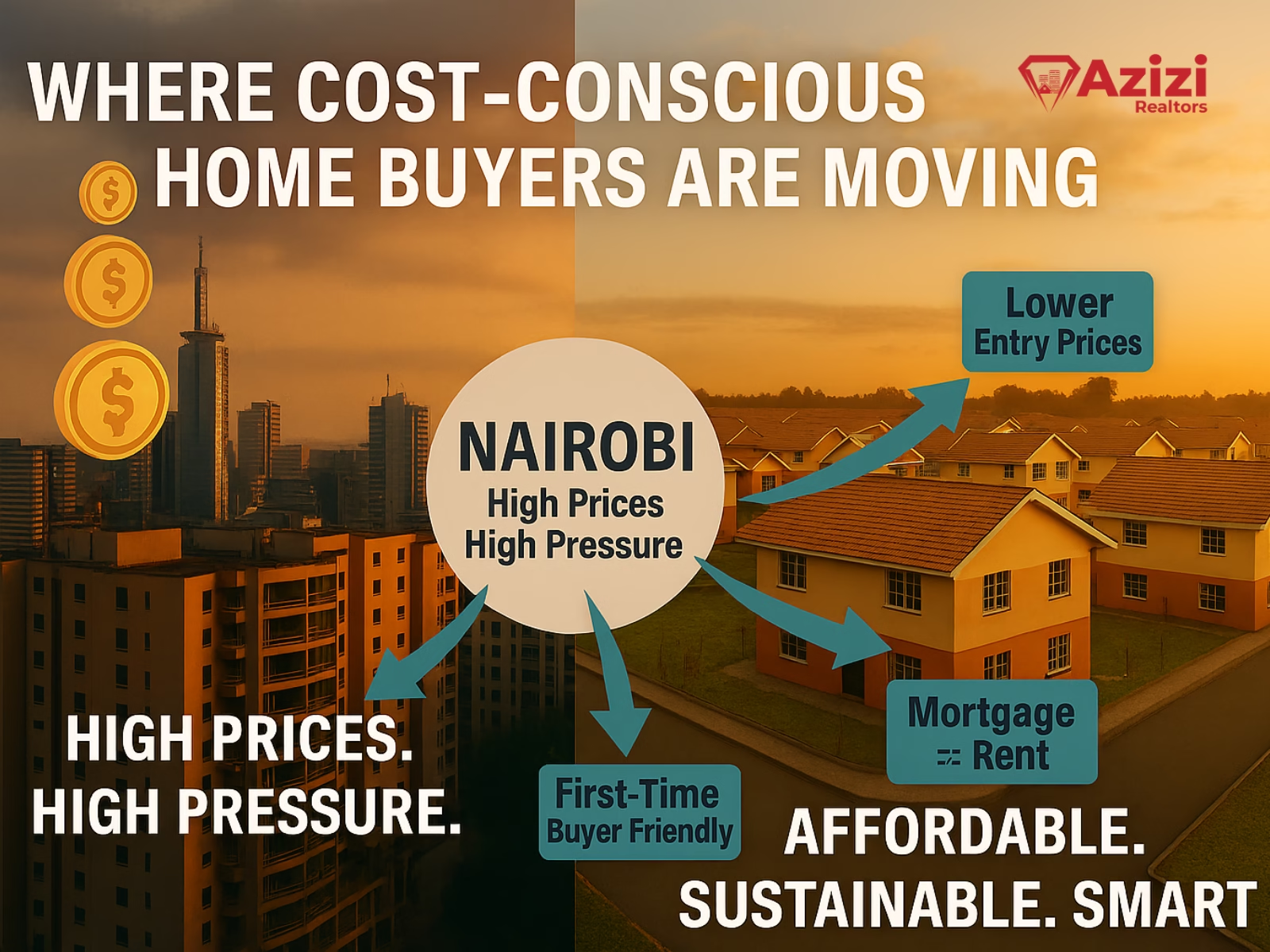
Are Cost-Conscious Home Buyers Flocking Affordable “Refuge” Housing?
In Kenya, cost-conscious home buyers are structurally redefining the real estate market. For a long time the dream of owning a home has been a steep climb.
Over the decades the narrative on homes has been of glossy images of luxury apartments in Nairobi surburbs that remain out of touch for the majority.
With the rising cost of living, high mortgage rates and stagnant incomes, Kenyans are rethinking what home ownership means to them. Buyers are shifting from preference to necessity choosing the where, what and why they are buying.
Therefore, cost-conscious home buyers are moving from premium estates to “refuge markets” or affordable housing. The goal here is to own without the financial strain but having a financial refuge. Choosing to settle for the modest, functional and affordable homes in satelitte areas other than overpriced glossy houses.
Who Are Cost-Conscious Home Buyers?
These aren’t bargainers but they are planners. Strategic and value-driven individuals who male financial decisions with unprecedented pragmatism.
Cost-conscious home buyers include:
1. Median Income Households
These are pragmatic planners. Often they earn between KSh. 70,000 and 150,000 monthly. To them cost-consciousness means financial prudence. The analyze purchase price by calculating the service charge, commute cost (fuel or public transportation) or the estate levies.
The impact they have on the market is that they have increased the demand for serviced plots. Here they build one room at a time as finances allow.
2. First-time Buyers
Cost-consciousness is not a choice for some first-time buyers more of a survival strategy. They compare units as the market they are entering has high entry barriers.
Their impact on the market is they force developers to create entry-level units like studio and 1-bedroom apartments.
3. Young Professionals
These buyers often range between 25-35 years, they blend aspiration with analytics. To them the modern lifestyle is good but not the spreadsheet-justified budget. They explore mortgages, need aesthetic within a budget and to them convenience is currency.
They are the greatest drive for co-living developments where affordable apartments have shared amenities like gyms and workspaces.
4. Long-term Occupiers
These buyers are probably second-time buyers and older looking for a final home or retirement base. Their cost-consciousness is based on sustainability. They look for the aging in place kind of design with single-floor layouts, prefer use of durable materials.
In the market, they have elevated demand of features like solar installations and borehole more than luxury.
These buyers ask different questions like “If I rent this property can I afford this for the next 10 to 15 years?”. To them the appreciation of the property isn’t on their mind but job secuirty, monthly repayments, cost of living as well as interest rate risks.
Why “Cost-Conscious” Is The New Kenyan Reality
This shift is from the pressure that aspiring home owners are facing. The growing inflation is squeezing Kenyans incomes. Despite the fluctuating mortgage interest rates people still remain cautious. The Market-Rate Commercial Model of 20/80 has proven challenging for many.
Likewise, stalled projects and malfeasance from developers has made buyers wary. Gone are the days when one would buy to the promise and glossy brochures. Today’s cost-conscious home buyers are researching more and rely on proven track records of developers. In the market now, affordability must be paired with credibility.
This storm has increased the demand of affordable housing typically priced below KSh 10 million or lower. The Rent-to-Own model is one of those led by the Affordable Housing Program (AHP) that allows the buyer to pay a 10% deposit and move in immediately.
What is Refuge Housing or Markets
Just from the word refuge as it captures the essence of the movement. Refuge markets aren’t cheap markets they are stable and affordable often located in emerging satellite areas.
Refuge housing offers:
- Financial refuge – a purchase that doesn’t cripple one’s lifestyle or future.
- Security refuge – owning a space or an asset shielded from rental inflation.
- Community refuge – integrated communities, offering shared amenities fostering a sense of belonging.
Key traits of refuge markets:
- Most are located outside expensive urban areas
- They offer better property price-to-income alignment
- Not driven by speculation but by end-user demand
- Often supported by infrastructure development
Key Refuge Markets Around Nairobi
With the growth of satellite areas, some refuge markets that are gaining momentum in Kenya. Example of areas absorbing buyers that are priced out of Nairobi are:
a. Ruiru and Juja
These towns have strong transport links, a growing supply of residentials and access to industrial zones.
b. Athi River
Here you will find affordable housing projects that are readily available, the cost of buying land is lower than other areas and there is industrial employment base.
c. Kitengela
Kajiado County in general is full of refuge housing. This particular area is quite popular with first-time buyers and has entry-level pricing. In addition, the infrastructure is always expanding making the houses perfect for cost-conscious home buyers.
d. Ngong
This area code has a growing end-user demand and the pricing for the properties is moderate. To top it all of there is the lifestyle appeal.
The Mind of the Cost-Conscious Home Buyer
Understanding and knowing what this buyer prioritizes is key. You can use this checklist to position properties and home ownership for these buyers:
- Pricing is a priority. The total cost must be justifiable and manageable within their income bracket. Hidden costs like extra levies and service charges are a major red flag.
- Flexible payment plans offered by the developer as they provide alternatives from traditional forms of mortgages.
- Location that is keen on infrastructure developments like new roads or just growing commercial hubs.
- Prioritize essential amenities over luxury. Amenities like solar options, reliable water supply and secuirty not so much swimming pools and gyms.
- Off-plan projects or just development projects that are backed by reputable developers with a great track record.
So, what is the psychology of a cost-conscious buyer?
When it come to housing, these buyers fear:
- Losing their jobs
- Over-committing to overpriced properties
- Rising interest rates
So they end up valuing:
- Predictable payments with timelines they can accomplish
- Emergency buffers
- Long-term peace of mind that comes with the house they settle on
This goes to show that ownership is no longer about status. It is about control.
The Ripple Effect of Affordable “Refuge” Housing on Kenyan Real Estate Market
The shift towards more affordable housing is redefining the industry by:
- Revitalizing satellite town where the demand for rapid development is growing in these areas and attracts businesses.
- Change in rental market dynamics with more people becoming homeowners shifting the demand of long-term rentals.
- Market is rewarding community-centric developments offering holistic living not just collection of houses.
What Does This Mean For Developers?
Developers cannot ignore the cost-conscious buyers as they will struggle. The projects that win are those that:
- Target end-user demand
- Offer flexible payment plans
- Build properties where income can support ownership not exclude people
- Price tags that are realistic
With many Kenyans falling under the median income bracket, they will move towards affordable and refuge-market projects leaving overbuilt, overpriced projects sitting longer.
What Does This Mean For Policymakers and Planning?
Kenyan policies and urban planning need to shift with demand by:
- Having more financing models for property beyond the traditional nortgages that makes people too cautious.
- To have more transit-oriented developments (TOD) in refuge markets.
- Aligning income and housing supply in a more sustianable way.
- More infrastructure investments outside Nairobi to reduce the oversupply of properties.
Are Refuge Markets the Future?
Refuge markets are a major step in the future if the cost of living remains as is or higher, credit of housing remains expensive and incomes lag the rental/sale prices.
If something doesn’t change the cost-conscious buyer will keep seeking these refuge markets. We can view it as more of a structural correction and not a temporary cycle.
Final Thoughts: A New Kenyan Real Estate Ethos
The unifying factor for a Kenyan cost-conscious home buyer is the shift from speculative investment to a value-based consumption. Likewise, gone are the days when the Kenyan market revolved around Nairobi alone. The shift now revolves around affordability and sustainability.
These buyers aren’t just looking for a property they can quickly resell they want a home. A property they can live in and secure their families and build sustainable wealth. The shift is now from postal codes to value propositions. From those glossy brochures that sell a promise to verifiable completion records.
For investors and developers building, selling or buying, don’t ignore the cost-conscious home buyers. Affordable and refuge housing aren’t alternatives anymore they are a central demand.
Buying smart matters more than buying fast.
At Azizi Realtors, we help cost-conscious home buyers identify affordable homes, refuge markets, and payment options that match real incomes and not hype.
Whether you’re buying your first home or planning long-term, our role is simple: guide you to ownership you can sustain.
👉 Talk to Azizi Realtors before you decide where to buy.