Upgrading Your Home in Kenya: When Selling Your Current Home and Buying the Next Don’t Align
Upgrading your home in Kenya can be an exciting experience. You imagine getting more space at a better location and a home that fits your current life.
But the idea of a new home and the move lies a painful reality many homeowners don’t talk about.
The gap.
What we have seen with most of our clients is thegap between selling your current home and buying the next one.
This is where stress lives. Where plans stall. Where families feel stuck, rushed, or financially strained.
If you’re upgrading your home in Kenya, understanding this gap early can save you time, money, and regret.
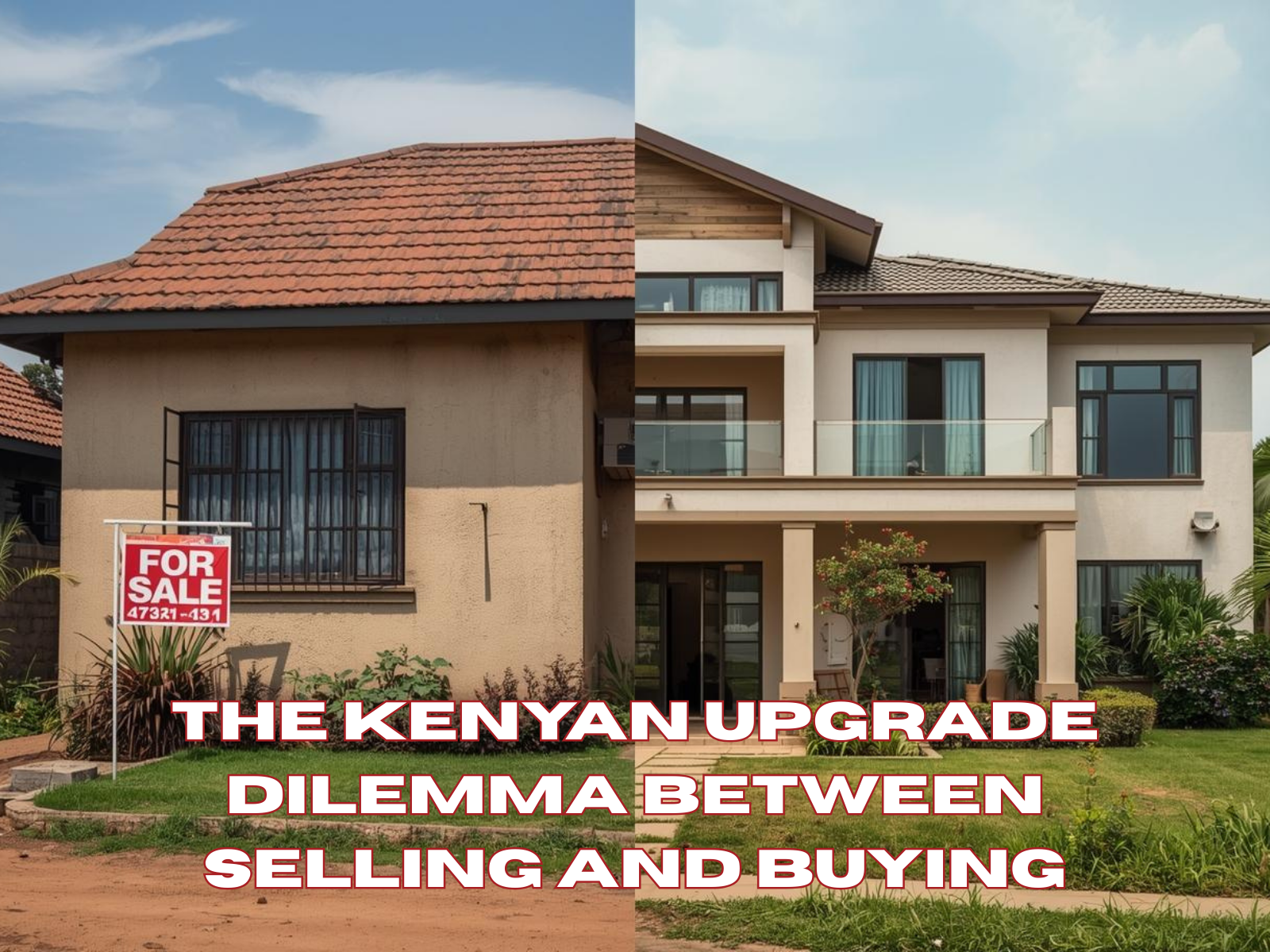
The Kenyan Upgrade Dilemma
Meet the Adongo’s. For seven long months, they have lived in a state of real estate purgatory. They have outgrown their 3-bedroom townhouse in Kileleshwa and want to sell and are looking for a 4-bedroom townhouse in Karen. Getting a house they loved took them 7 months but once they found one their current home was taking time to be sold.
Like many Kenyan homeowners they were in the gap between selling their current home and buying their next home.
This isn’t just a story about moving houses; it’s a stressful financial and logistical puzzle involving bridge financing.
Why Upgrading Your Home in Kenya Is Harder Than It Looks
Upgrading your home in Kenya is rarely a straight line. Most homeowners assume the process will be simple: Sell → Buy → Move.
However, the Kenyan property market operates on asynchronous timelines. It never moves at the same speed on both sides.
In addition, in the real estate market financing timelines don’t always align. Sale and purchase are two distinct transactions.
That mismatch creates pressure.
The Core Challenges
- The cash-flow lock. If your equity is trapped in your current home until the sale completes, you cannot commit to a new purchase.
- Mismatched market speed. The market of selling your home in Syokimau can move faster than finding and securing a premium property in Karen.
- Most purchase offers in Kenya are conditional on the sale of your current home, making you a less attractive buyer to sellers.
- Logistical Chaos. Where do you live, and where do you put your belongings, if the sale closes before you can move in?
The Selling-Buying Gap
1. Emotional Cost
Upgrading your home in Kenya is not just a financial decision.
It’s an emotional one.
Families worry about:
- Where they’ll live temporarily if their current home sells before buying
- Storage costs and double moves
- Whether they rushed into the wrong home since buying is a
- Losing negotiating power
- Disrupting school routines
For many homeowners, this gap turns what should be a milestone into a season of anxiety.
2. Financial Pressure
Cash flow is one of the pain points of the selling-buying gap. One needs to understand this about selling and buying.
When you sell first it means:
- You may need to move twice which means double moving cost
- Storage costs may add up
- You may need temporary rent if you aren’t immediately moving to your new home
When you buy first it means:
- You may need bridge financing
- You could be servicing two properties at once
- Budget may feel stretched
Here uncertainty becomes expensive.
Strategic Financial Bridging
This is the most critical piece of the puzzle. You need access to capital to secure your new home before your old one sells.
Option 1: Bridge Financing in Kenya
A short-term loan specifically designed to “bridge” the gap between the two transactions.
In Kenya, a bank like Stanbic could lend you around 60-70% of the value of your current home to pay the down payment for the new house. Then the loan is repaid once the sale of your home completes.
However, in reality as sweet as this sounds interest rates are high, short loan terms as well as arrangement fees.
Who bridge financing is best for: A buyer who wants to act fast in a competitive bidding situation for a dream home they found.
Option 2: Equity Release/ Top-Up on Existing Mortgage
If you happen to have significant equity and a good relationship with your current lender you can apply for a further advance on current mortgage. This is before selling the property and the cash can be used as a down payment.
Although, with this option you start servicing two mortgage payments which is best for someone with a strong debt-to-income ratio.
Option 3: The Family & Chama “Soft Loan”
Here you can leverage personal networks for short-term, low or no-interest loans. If you are in an investment group like a chama you can borrrow a down payment and repay it upon sale.
This is a good option as it protects you from high interests but needs a written agreement as you are mixing finances and family.
Option 4: The Contractual Contingencies
With contractual contingencies you can get to build safety nets into your legal agreements that protect you.
The home sale contigency clause stating that the purchase of a new home depends on selling your current one.
Rent-back agreement which happens when a buyer isn’t ready to move and negotiates to stay in as a tenant for 1 month or 2 after sale.
Contractual clause for an extended closing period on your current sale to give you enough time to house hunt for a new home.
The Logistical Bridge
One of the pain point while upgraing a home in Kenya is the operational or logistical issue. If the gap between homes persists, prepare a logistics backup plan.
Temporary Housing Solutions in Nairobi:
- Serviced apartments and are ideal for 1 to 3 months stay. In areas like Lavington, Kilimani and Westlands they offer leases for about KES 100,000 – 200,000 per month.
- Short-term rentals that offer 3 to 6 month leases for unfurnished apartments. It is best to choose an area that isn’t too expensive to save on cost.
- Most effective but may test relationships is staying with family.
The Storage Conundrum:
- Get a full-service storage that will store your goods like Storage Central Kenya it may cost you but is hassle-free.
- Pro-tip: You can downsize before sotring your goods. Donate, give away some items or sell those you don’t need.
Conclusion: Bridging the Gap with Confidence
Upgrading your home in Kenya is a mark of success, but the transition period is a complex financial and logistical operation. The key is planning for the gap before it opens.
- Talk to a financial advisor and your bank first. Understand your bridge financing options and costs.
- Partner with a real estate agent who understands simultaneous transactions and can strategically time your listing.
- Have a detailed Plan B for housing and storage, with reserved funds to execute it.
By treating the gap not as an unforeseen crisis, but as a planned phase of your upgrade, you transform a period of potential stress into a strategic, controlled step toward your dream home.
The goal isn’t just to survive the gap, but to move across it with your sanity, finances, and dream home intact.
Feeling stuck in the gap of upgrading your home in Kenya? You don’t have to navigate it alone.
Before making any moves, take time to understand your timelines, options, and trade-offs.
At Azizi Realtors, we focus on buyer and seller education — helping homeowners make informed decisions, not rushed ones.
Explore more insights on navigating Kenya’s real estate market with clarity and confidence.