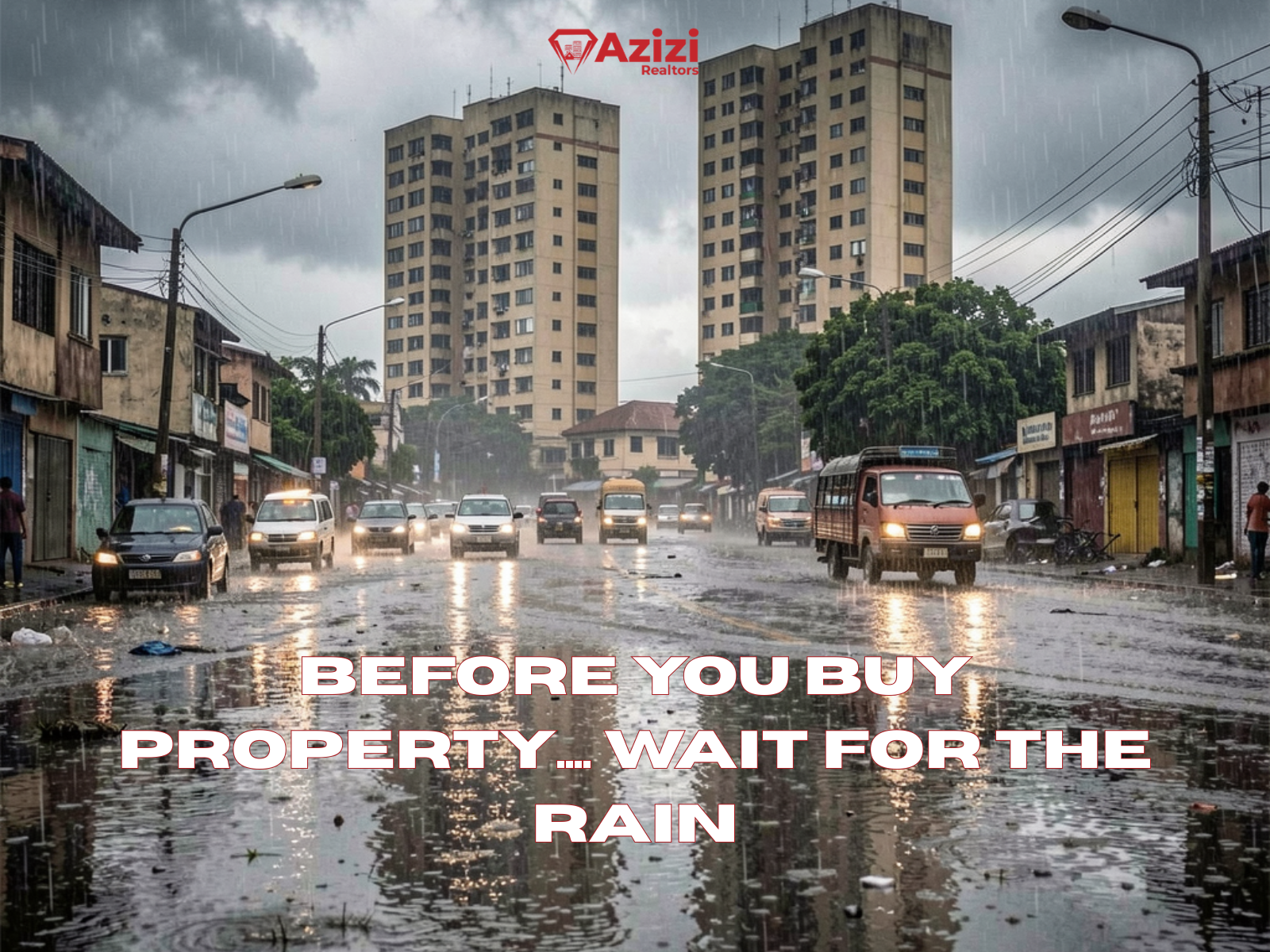
Why Nairobi’s Rainy Season Is the Ultimate Property Stress Test
Nairobi’s rainy seaon is more than just a weather pattern but more of a property stress test. It exposes the flaws that exist in the glossy brochures with the shortcuts that developers take.
Property owners every year hold their breath as dark clouds gather and heavy drops pound the rooftops.
With the rains, some roads flood. Drainage systems are tested. Basements fill. Commute times double. And suddenly, what looked perfect in dry weather tells a very different story.
Although it brings relief from the dust and greenery it also reveals leaking roofts or cracked foundations or poor infrastrcuture.
The unpredictability of Nairobi’s weather patterns makes it important to understand how your property will perform during long rains.
So whether it is:
…viewing after the heavy rains saves you future repairs.
So today, embrace the mud and schedule a site visit when the skies open up.
The Anatomy of a Failed Property Stress Test
When Walls Become Waterfalls
A real-time property stress test for rainy season is the collapsed perimeter wall along Valley Road in January 2025. One resident described it as “little pieces of Lego”. The raging waters turned roads into rivers trapping residents into their homes and school children stranded.
This quickly highlighted how saturated soil and poor drainage can create structural risks. Additionally, in April 2024, with rivers like Nairobi and Athi overflowed displacing around 380,000 people. It damaged residential areas and urban infrastructure.
The uncomfortable truth:
A home that looks pefect when the sun is out in January can become uninhabitable in April’s deluge.
So, for first-time buyers or investors, inspect a property during heavy rains. Check the road access, the performance of the estate or even the drainage flow.
The Hidden Flaws the Rain Exposes
1. It Exposes Poor Drainage Instantly
Drainage is the number one complaint when it comes to Nairobi Real Estate. With developers prioritizing
On a dry day, a compound can look pristine. The driveway is paved, the garden is manicured, and the road access seems fine. But 30 minutes of heavy downpour can turn that same driveway into a swimming pool. Even worse turn the access road into an impassable river.
What to look for during the rains:
- Does water pool around the foundation or in the parking area?
- Can your car actually make it to the gate, or do you need a 4×4 just to get home?
- Is the property in a low-lying area (like parts of South C or Nairobi West) notorious for flash floods?
Pro Tip: Ask the neighbors or security guards how the area handles “flash floods” during the long rains. Their on-the-ground experience is invaluable.
2. Structural Vulnerability
When it rains soil pressure increases and here is where soil composition comes to play. Black cotton soils retain water and worsen flooding, while sandy and mixed soils drain faster.
Many buyers discover this distinction only after their foundation starts shifting during the rains.
In such structures you may see:
- Cracks forming or widening
- Retaining walls leaning
- Damp patches along interior walls
- Ceiling discoloration
A “property stress test” for ceilings:
- Yellow or brown rings on the ceiling often indicate a slow, persistent leak.
- Active dripping especially in top-floor apartments or older maisonettes.
- A musty smell or visible mold in corners is a sign of poor ventilation and chronic moisture issues.
What to look for during the rains:
- Check wall corners and ceiling joints for moisture.
- Inspect perimeter and retaining walls for tilting.
- Smell for dampness or mold indoors.
- Examine basement walls carefully.
Pro Tip: Touch the walls. Cold, slightly wet surfaces often signal hidden seepage even if paint looks intact.
3. Exposes Infrastructural Gaps
Nairobi’s rainy season isn’t only a property stress test but also a public system test. Some common failures properties face due to infrastructure are power interruptions, inconsistency in water supply or sewer backflow.
In some areas like Donholm and parts of Kasarani the blocked drainage systems turns streets into rivers. This is often due to residents dumping garbage into the drains.
What to look for during the rains:
- Are storm drains regularly cleaned?
- Does the estate have a borehole?
- Is there backup generator capacity?
- Does the management respond quickly during disruptions?
Pro Tip: Ask the property manager:
“How did the estate perform during the last heavy rains?”
The confidence (or hesitation) in their answer says a lot.Why Are Floods a Property Stress Test?
1. The New Real Estate Currency: Climate Data
For years, the Kenyan property market was driven by three classical forces: location, infrastructure, and pricing. But 2023 to 2025 introduced a surprising fourth pillar—climate data .
Today, the Nairobi flood risk property market is quietly emerging as one of the most important metrics shaping buyer decisions, investor strategies, and even bank lending policies .
The shift began after the devastating 2023 and 2024 El Niño seasons, which damaged over 44,000 homes nationwide and caused drainage failures across major Nairobi suburbs . Banks started conducting climate-risk evaluations before approving mortgages in select high-risk zones such as South C, Imara Daima, and parts of Kasarani .
2. Winners and Losers in the New Climate Economy
The market is now clearly rewarding flood-safe neighborhoods in Nairobi while punishing those in high-risk zones .
Flood-safe elevated zones:
Areas above 1,700 meters—such as Karen, Loresho, and Ridgeways—remain flood-resistant and have seen land price increases of 12% to 18% . Buyers are flocking to these elevated areas, recognizing that elevation is the best natural defense against flooding.
Moderate risk zones:
Areas with medium flood exposure have seen flat or minimal growth (0% to 5%), as cautious buyers demand discounts for assuming climate risk .
High-risk flood zones:
Properties in flood-prone pockets like Pipeline, Tena, Donholm Phase 8, parts of Ruai with black cotton soil, and South C lowlands have experienced price declines of 5% to 15% . Buyer avoidance is becoming pronounced as word spreads about repetitive flooding.
Heat-island estates:
Even areas not at flood risk face climate challenges. Concrete-dense neighborhoods with poor tree cover experience significantly higher temperatures, creating what experts call “heat islands.” These areas show mixed but weakening buyer sentiment.
Savvy First-time Buyer or Investor Rainy Season Inspection Checklist
First-time buyers may not know that the best time to inspect a property is during heavy rains. Here is when all secrets reveal themselves.
Azizi Realtors has drafted a checklist you can use:
- Assess the pros and cons of potential sites in real-time. Personally assess quality of draingae systems as during dry seasons it is hard to evaluate.
- Ask neighbors about past flooding especially in areas with blocked drins and low-lying terrain.
- Check the topgraphy like the land’s slope. Examine the natural patterns of the water flow.
- Verify if the building meets the requisite standards. Some developers cut corners while constructing and the rain exposes those shortcuts.
- Assess the window seals if water is seeping through closed windows. If it is that shows poor aluminium or iPVC installation.
- Check the painting on the wall if it is bubbling or peeling, the house lacks propert damp-proof course.
- Pay attention to if the property has external cracks as it will expand over time.
- Do a traffic and commute reality check as the traffic in Nairobi changes drastically with rain.
Property Stress Test for Current Homeowners
If you already own a home in Nairobi, the rainy season still serves as a diagnostic tool. Here’s how to ensure your property passes the test.
Clean drainage systems regularly:
Nairobi’s Environment Chief Officer urges residents to “ensure that the drainage system around your residential area is free of garbage and unclogged” . This simple maintenance prevents water from backing up into your compound.
Check gutters and downspouts:
Ensure they’re clear of debris and directing water away from your foundation.
Inspect for leaks:
The rains will find every weakness in your roof. Better to discover them during a manageable drizzle than a catastrophic downpour.
Consider waterproofing:
For bathrooms, kitchens, and basement areas, professional waterproofing treatments can prevent moisture intrusion and mold growth .
Maintain proper ventilation:
High humidity during rainy seasons creates perfect conditions for mold and mildew. Open windows during brief sunny intervals and use fans strategically .
Join a residents’ association:
Collective action through neighborhood associations can pressure county governments to maintain public drainage systems and address infrastructure gaps.
Final Thought: Let the Rain Be Your Property Stress Test
The Nairobi rainy season is not an inconvenience.
It is an opportunity.
An opportunity to evaluate real estate honestly.
An opportunity to minimize investment risk.
An opportunity to conduct a real-world property stress test before purchase.Because the best properties in Nairobi are not the ones that shine in sunshine.
They are the ones that pass the property stress test when the rain comes.