Ruaka Property: From Farmland to High Rise
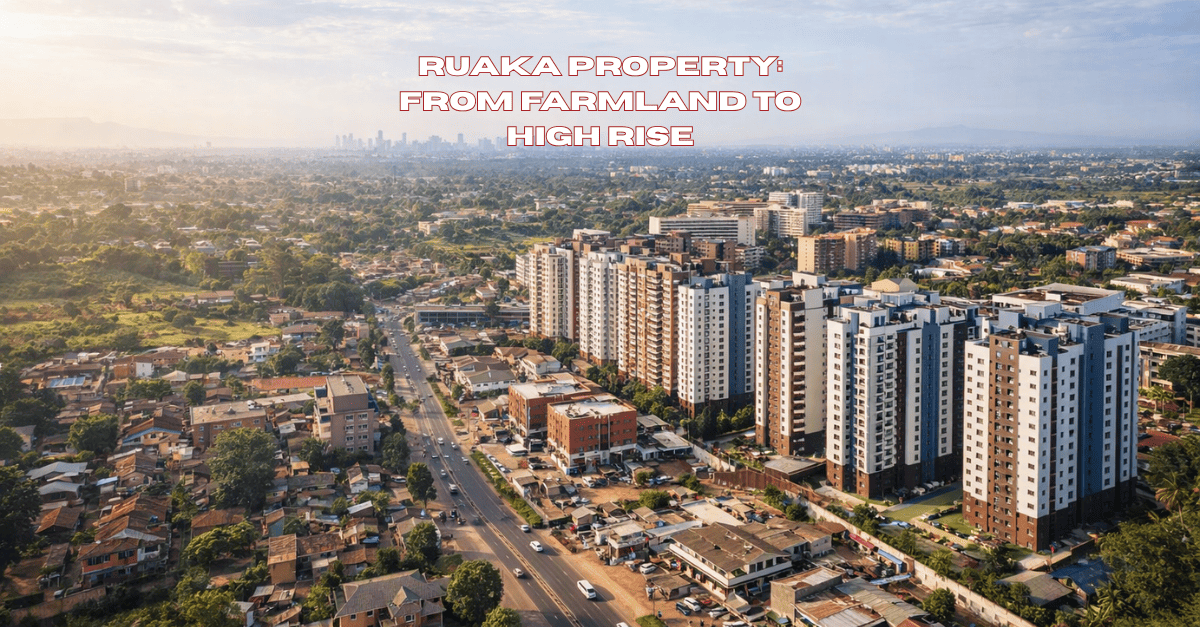
The Ruaka property that Nairobians recognize today differs from what existed years ago. Before the skyline of apartment blocks, busy commercial centres and traffic it was largely farmland on the edge of a growing Nairobi.
They were many open spaces and agricultural land stretching across areas that few would have imagined becoming one of Kenya’s most closely watched property markets.
High rise apartments have replaced much of the open land. Commercial centres have followed the growing population, major roads have transformed accessibility, and land values have climbed dramatically as Nairobi continues to expand beyond its traditional boundaries.
But Ruaka’s transformation is more than a story about buildings. It is a story about what happens when infrastructure, population growth, commercial activity and rising demand come together in one location.
And now that Ruaka has become an established property market, the question is changing.
It is no longer simply, “How did Ruaka become so valuable?”
The more interesting question for today’s buyer and investor is:
What happens to a property market after everyone discovers it?
The Roads That Changed Ruaka
Ruaka’s location has always been part of its story, but accessibility gave the area a much bigger role in Nairobi’s expansion.
The town sits around the intersection of Limuru Road, Banana Road and the Northern Bypass, a position Kiambu County identifies as a major driver of the area’s rapid growth.
The Cytonn’s research on Ruaka describes Ruaka as having a bustling urban character, while also noting that local road infrastructure has struggled to keep pace with the rapid development of apartments and commercial buildings.
The Northern Bypass was particularly important because it changed how people could move through the wider Nairobi metropolitan area.
For someone working in Westlands, Gigiri or the northern suburbs, Ruaka became increasingly practical.
That matters because property markets rarely grow in isolation.
When commuting becomes easier, more people become willing to live further from the city centre. When more people move in, businesses follow. When businesses arrive, the area becomes even more attractive to residents.
The cycle feeds itself. Ruaka had entered that cycle.
Then the Apartments Started Rising
Once demand for housing increased, developers faced a familiar problem.
Land was becoming more valuable.
Building one large home on a sizeable parcel made less economic sense than developing multiple residential units where planning and demand allowed it.
The result is visible across Ruaka today.
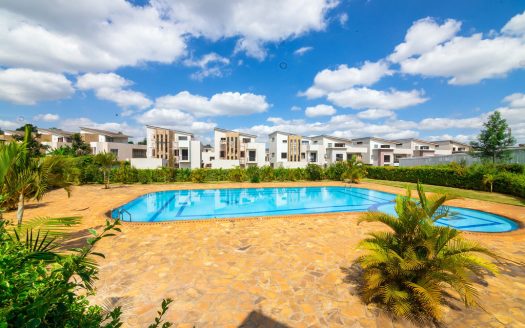
Apartment blocks have replaced much of the low density development, while mixed use buildings and commercial spaces have created a denser urban environment.
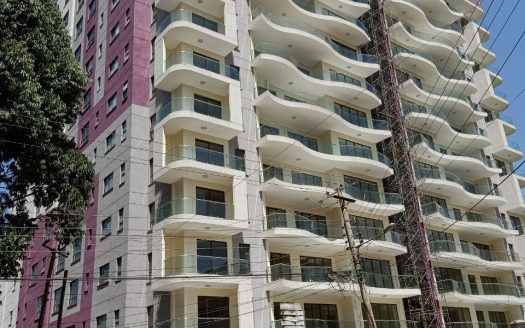
Kiambu County records residential flats and mixed use developments reaching five to ten storeys in Ruaka, with buildings becoming closely packed as development intensifies.
This is one of the clearest signs of how the economics of the area have changed.
The more valuable the land became, the more efficiently developers needed to use it.
And that is how farmland became a high rise skyline.
When Commercial Development Changed Ruaka Property
The next stage of Ruaka’s transformation was not just residential. It was commercial.
As the population grew, people needed supermarkets, restaurants, banks, healthcare, schools and entertainment without travelling into Nairobi for everything.
Major retail and commercial developments helped reinforce Ruaka’s position as an urban centre rather than simply a residential suburb.
Its proximity to areas such as Gigiri, Runda and Westlands also strengthened the appeal, while developments around the wider Limuru Road corridor added to the area’s commercial pull.
This matters to property investors because amenities create more than convenience.
They create reasons for people to stay.
A tenant may initially choose Ruaka because the rent makes sense. They may remain because their supermarket, gym, restaurant, workplace and weekend activities are all within easy reach.
That is how a location becomes a market.
The Ruaka Property Paradox
This is where the story becomes much more interesting.
Ruaka land has become extremely valuable, while apartment investors face increasing competition.
The two things can happen at the same time.
The Q1 2026 Hass Land Index, put Ruaka land prices above KSh 111 million per acre, making it one of the standout performers among Nairobi’s satellite markets.
That tells us something significant about the underlying land.
But land scarcity does not automatically mean every apartment built on that land will become more valuable.
There is a difference between scarce land and scarce housing.
Ruaka has limited land in strategic locations. It does not have limited apartments which means developers can continue building upwards.
And when several developments offer similar one and two bedroom apartments to the same pool of tenants, the investor is no longer competing against the neighbourhood.
They are competing against the building next door.
That is the point at which simply saying, “I invested in Ruaka,” stops being enough.
The Apartment Market Is Getting More Selective
Current asking price data illustrates why investors should be careful about treating online averages as a simple measure of market value.
Kenya Property Centre recorded a median asking price of about KSh 6.6 million for apartments listed in Ruaka in June 2026, but that figure came from only four listings, which is too small a sample to represent the entire market.
Rental asking prices also vary considerably depending on apartment size and the specific property.
In July 2026, for example, its data showed a median asking rent of KSh 55,000 for two bedroom apartments, based on four listings. Again, the small sample means this should be treated as an indicator rather than a market-wide benchmark.
And that is precisely why investors need to look beyond headline numbers.
The question is not:
“What is an apartment in Ruaka worth?”
The better question is:
“What can this particular apartment realistically earn, and who will pay for it?”
What Makes One Ruaka Property Stronger Than Another?
For investors, the details increasingly matter.
Two apartments can sit in the same neighbourhood and perform completely differently.
One may have better access to the main road but sit far enough away to avoid excessive noise. Another may have excellent views today but face another construction project tomorrow.
A building may have a strong management structure and reasonable service charges. Another may look impressive on launch day but become difficult to maintain once the development ages.
The investor therefore needs to examine the entire proposition.
- Location
- Developer track record
- Construction quality
- Service charge
- Amenities
- Parking
- Security
- Actual rental demand
- Competing supply
Most importantly, the numbers need to work without relying entirely on future appreciation.
What About the Family Buying a Home?
The calculation changes when the buyer is not primarily looking for rental income.
For a family, Ruaka’s appeal can be its balance between accessibility and relative affordability compared with some of Nairobi’s established high end neighbourhoods.
But the same growth that created opportunity has also created pressure.
Traffic can affect the daily commute.
Road infrastructure does not always match the speed of construction.
And the difference between living near the main commercial corridor and living in a quieter residential pocket can be substantial.
The right property therefore depends on the family’s actual routine.
Where do they work?
Which school do the children attend?
How often do they need to access Nairobi?
Do they need proximity to shopping and entertainment, or would they rather have more space and privacy?
The best property in Ruaka is not necessarily the newest one.
It is the one that fits the life or investment strategy behind the purchase.
And What Does This Mean for Diaspora Buyers?
For someone buying from abroad, the need for careful property selection becomes even greater.
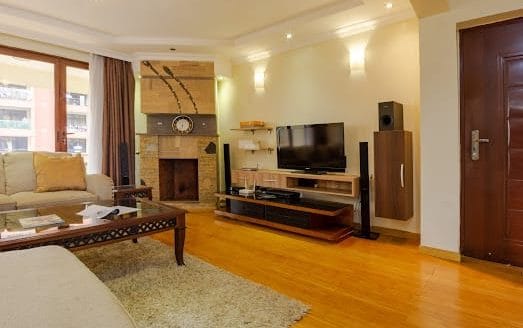
A developer’s brochure can show the finished apartment.
It cannot show you what happens to the surrounding neighbourhood three years later.
Whether competing buildings are offering similar units at lower rents.
Likewise, it cannot independently establish whether projected rental income reflects what tenants are actually paying.
And it cannot replace physical due diligence.
For diaspora buyers considering Ruaka property investment, the research should therefore include the neighbourhood, surrounding developments, infrastructure, rental evidence, ownership documentation and the developer’s track record.
Distance should never mean lower standards of due diligence.
So, Is Ruaka Still a Good Investment?
There is no single answer.
For land buyers, Ruaka remains compelling because of its connectivity, established demand and limited supply of strategically located land, although today’s high entry prices mean the development potential of a specific parcel matters enormously.
For apartment investors, the opportunity still exists, but the market is becoming more selective. Rental demand alone does not guarantee strong returns when several similar units are competing for the same tenant.
For homeowners, Ruaka can offer a practical combination of accessibility, amenities and housing choice, provided the specific location works for their daily routine.
And for diaspora buyers, the opportunity can be attractive, but independent verification becomes even more important when the buyer is not physically present.
The market has matured.
That changes the question.
What Ruaka Can Teach Us About Kenya’s Next Property Markets
Ruaka offers a useful blueprint for understanding how emerging property markets develop.
First comes infrastructure.
Infrastructure makes an area accessible.
Accessibility attracts residents.
Residents attract businesses.
Businesses create convenience.
Convenience creates stronger demand for housing.
Housing demand attracts developers.
And development pushes land values higher.
But there is another side to the cycle.
Once developers recognise the opportunity, supply increases.
Competition intensifies.
And eventually, investors have to become more selective.
That is where Ruaka is now becoming particularly interesting. The story is no longer simply about growth. It is about maturity.
From Farmland to High Rise
Ruaka’s transformation is easy to see.
The farmland has given way to apartment towers. Quiet roads have become busy corridors. Small trading centres have evolved into commercial destinations.
And land that once sat on Nairobi’s outskirts has become one of the most valuable assets in the wider metropolitan area.
But the next chapter of Ruaka property will not simply be about building more.
It will be about building and buying intelligently.
For developers, that means understanding what the market actually needs rather than simply adding another similar apartment block.
For investors, it means looking beyond the promise of capital appreciation and understanding rental demand, competing supply and the numbers behind the property.
For homeowners, it means choosing a location based on the life they actually want to live rather than buying into a neighbourhood simply because everyone says it is “hot.”
And for anyone watching Kenya’s emerging property markets, Ruaka offers perhaps the most valuable lesson of all.
A location can become successful because of growth, but eventually, success demands more than growth.
It demands differentiation, infrastructure, and, good planning.
And ultimately, it demands property that continues to make sense to the people who live, work and invest there.
The question is no longer whether Ruaka will continue changing.
It is which properties will create lasting value as it does.
At Azizi Realtors, we look beyond the asking price to understand the location, the market, the property and the person buying it.
If you are considering property in Ruaka for your home, investment or land purchase, speak to our team with your budget and objective so we can help you assess the opportunity before you commit.