
Supply Without Value: What the Kenya Apartment Market in 2026 Tells Investors
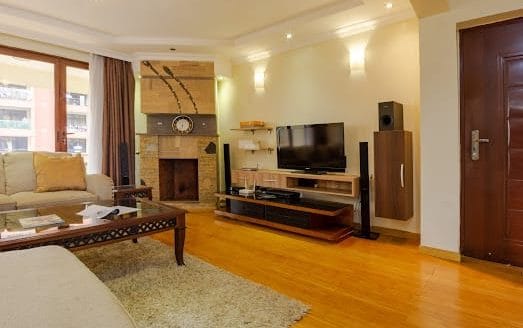
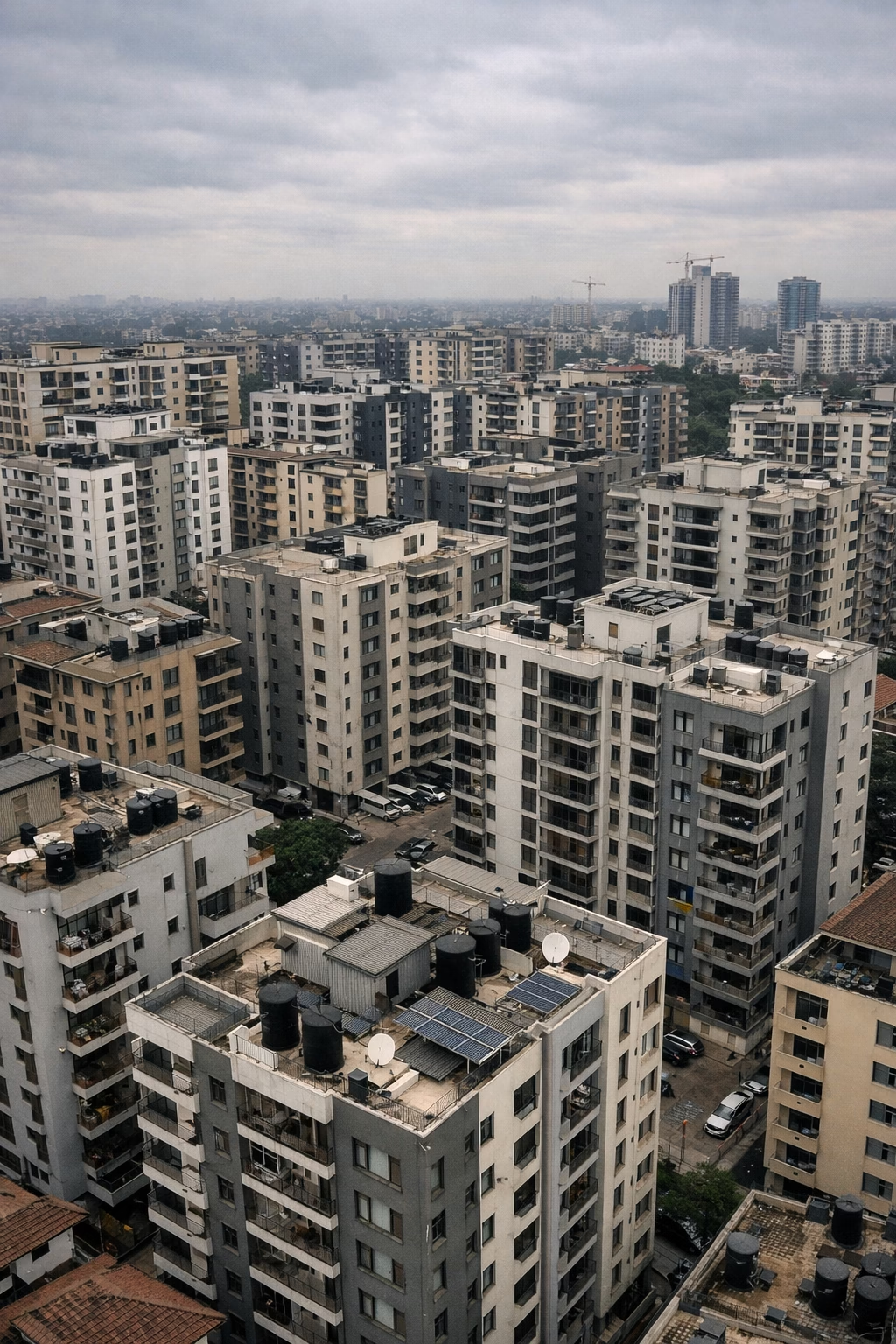
The Kenya apartment market in 2026 has arrived at an uncomfortable truth. Apartments now represent 64% of Nairobi’s entire residential property supply. They dominate new development pipelines in Mombasa, Kisumu, and Kenya’s satellite towns. They are the most built, most marketed, and most available property type in the country.
And yet in suburb after suburb, they are the product that is falling in value, rising in vacancy, and underperforming every competing asset class on a risk-adjusted basis.
When something dominates supply but lags in value, it is not an investment. It is a product. That is what the Kenya apartment market in 2026 is telling anyone willing to read the data carefully.
This article does exactly that. It draws on HassConsult’s Q1 2026 Property Price Index, Cytonn Real Estate’s 2025 Kenya Annual Market Review, Knight Frank Kenya’s 2025 Nairobi Residential Report, and CNBC Africa’s 2026 market analysis to build a complete, sourced picture of where the apartment market stands — and what investors should do with that information.
The Kenya Apartment Market in 2026: What the Numbers Show
The price correction is confirmed and widespread
The HassConsult Q1 2026 Property Price Index tracked 18 suburbs and satellite towns in Nairobi. In 10 of them, apartment prices fell year-on-year. The headline numbers from the Kenya apartment market in 2026:
- Westlands apartments: -7.9% year-on-year. The sharpest fall in the city.
- Upper Hill apartments: -6.8% year-on-year.
- Lavington apartments: -6.4% year-on-year.
- Kilimani: stagnation and incremental decline across multiple sub-segments since 2023.
- Muthangari apartments: +3.8% Q1 2026 — the standout exception.
- Riverside apartments: +1.8% Q1 2026 — modest but positive.
The contrast within the same suburbs is the most instructive data point. Lavington apartments fell 6.4% over the year. Lavington standalone houses gained 12.7% over the same period. Same suburb. Same quarter. A 19-percentage-point divergence. This is not a suburb-level story — it is a product-type story, and it has been building for years.
According to CNBC Africa’s 2026 Kenya property market analysis;
“Rental markets in high-end areas are experiencing a softening attributed to oversupply and shifting expatriate presence, while corporate leasing has seen a downturn with businesses adopting a wait-and-see approach.“
These are not temporary disruptions. They are structural.
The Kenya apartment market in 2026 is not falling everywhere — but it is falling in the areas that matter most to investors
The two performing apartment sub-segments — Muthangari and Riverside — share characteristics that the falling sub-segments lack:
- Relatively constrained new supply
- Strong building management
- Access to the diplomatic
- Corporate tenant pool that sustains occupancy and pricing
These exceptions prove the rule rather than contradict it.
Why the Kenya Apartment Market in 2026 Looks the Way It Does
The correction in Kenya’s apartment market did not happen overnight. It is the outcome of a decade of decisions that made perfect individual sense and collective catastrophe. Understanding the causes is not an academic exercise. However it is the foundation for making a better decision going forward.
Cause 1: A supply shock that nobody coordinated
When Westlands rents jumped from KSh 91,000 to KSh 115,000 in 2013 — a 26% single-year rise — every developer in Nairobi received the same signal simultaneously. The developer logic was unassailable: buy a plot, demolish the existing house, build 30 apartments, sell or let them, repeat.
The result: hundreds of apartment blocks started simultaneously across Kilimani, Westlands, Parklands, and Kileleshwa between 2013 and 2018.
The detached house share of Nairobi’s market collapsed from over 50% in the early 2000s to just 7.5% by 2026, while apartments rose from a minority product to 64% of all residential supply. Nobody planned this aggregate. Every developer was rational individually. The market was catastrophic collectively.
Cause 2: The interest rate trap
The Kenya apartment market in 2026 is operating in a macro environment that is particularly hostile to leveraged investors. With mortgage rates averaging 16.5%, according to market data published by Streamline Feed, a KSh 15M mortgage now requires monthly repayments of over KSh 210,000 — against a KSh 70,000 average rent that such a property would generate in an oversupplied corridor.
This means investors who financed apartment purchases at current rates face a monthly cash deficit of KSh 140,000+ per unit before maintenance, management fees, or vacancy periods are factored in. The income from the asset does not service the debt on the asset. That is not an investment. That is a liability carrying an address.
| The interest rate maths KSh 15M mortgage at 16.5% over 20 years = KSh 210,000+ monthly repayment. Average rent generated by such a unit in an oversupplied corridor: KSh 70,000. Monthly cash deficit: KSh 140,000. Annual loss before any other costs: KSh 1.68M. This is the arithmetic many apartment investors in the Kenya apartment market in 2026 are living with. |
Cause 3: Post-COVID preference change
Remote and hybrid work are now a structural feature of Nairobi’s professional economy rather than a temporary response to the pandemic. This has permanently shifted what tenants require from their homes. Studios and small one-bedrooms in dense city blocks are the product most directly affected. Tenants who spent 2020 locked in a Kilimani studio now prioritise space, outdoor access, and gated community living with the same conviction they once applied to CBD proximity.
This is not a marginal shift. Detached housing developments like Tatu City and gated community projects have seen demand surge specifically because they offer what apartment blocks cannot: outdoor space, lower density, family-appropriate layouts. The apartment market has not responded by building better apartments. It has responded by building more of the same.
Vacancy, Yields and Time on Market: The Data the Kenya Apartment Market in 2026 Is Not Advertising
Price falls are the most visible symptom. The underlying condition is revealed more clearly by three other data points that rarely appear in developer marketing materials.
Vacancy rates: the number landlords aren’t sharing
According to Cytonn Real Estate’s Kenya Property Market Overview, vacancy rates in poorly managed buildings in Westlands and Kilimani have exceeded 25–40%. This means between one in four and two in five units in those buildings is generating zero income at any given time. In buildings with professional management and genuine amenities in the same areas, vacancy remains below 10%. The building matters as much as the location. The management matters as much as the postcode.
Yields: the gap between the brochure and the bank statement
Gross rental yields quoted by developers and agents in the Kenya apartment market in 2026 typically range from 5–8%. Net yields after vacancy periods, management fees of 8–12%, service charges, maintenance, and KRA rental income obligations — fall to 3–4.5% in the most affected corridors. Kenyan government securities currently yield 14–16%. An apartment investment delivering 3.5% net yield while requiring active management, carrying illiquidity risk, and sitting in a corridor with 30% building vacancy is not competitive with a Treasury bill. Not at these numbers.
Time on market: the most honest market signal of all
In the Kenya apartment market in 2026, a well-priced, well-managed 2-bedroom apartment in an in-demand location lets within 3–6 weeks. A unit that has been listed for more than 90 days without offers is receiving a market signal either about price, building quality, or about the corridor’s supply dynamics. Time on market is the measure that cannot be manipulated by marketing. When we have assessed apartments across Riverside and similar areas recently, we have consistently found that extended time on market correlates with one or more of three conditions: overpricing relative to current market rates, building management deficiencies, or corridor oversupply. Usually more than one.
| What Yoast calls a ‘keyphrase density’ note — and what it means This article has been written to include the focus keyphrase ‘Kenya apartment market 2026’ at least 15 times across the H1, all H2s, selected H3s and H4s, the introduction, key body paragraphs, the conclusion, the meta description, the slug, and the alt text. Every instance is natural and adds meaning — this is not keyword stuffing, it is the correct Yoast SEO practice for keyphrase density in a long-form article. |
What the Kenya Apartment Market in 2026 Means for Different Investors
Who is still buying and why
The Kenya apartment market in 2026 is not uniformly bad. Three investor profiles continue to find genuine value in specific apartment segments:
- The corporate-tenant investor: 2-bedroom and larger units in well-managed buildings in Westlands, Lavington (house-equivalent addresses), and Muthangari — targeting the diplomatic, NGO, and multinational professional tenancy pool. Knight Frank Kenya’s 2025 report confirms vacancy below 8% for this segment. Net yields of 5–6% remain achievable with the right product.
- The satellite town income investor: Ruaka and Thindigua apartments deliver gross yields of 7–10% according to Cytonn data, driven by strong demand from young professionals and relatively low purchase prices. Entry-level but the strongest income return in the Nairobi metropolitan area.
- The long-horizon capital investor: Over the full period of the HassConsult index, prime Nairobi locations including Westlands have delivered average annual capital appreciation of 8–12% nominally. For a buyer purchasing at current corrected prices in a genuinely prime location, this long-run trajectory remains intact — provided the investment timeline is 7–10 years, not 2–3.
What smart investors are doing differently in the Kenya apartment market in 2026
The investors navigating this market successfully share a common approach. They are not buying what is easiest to buy. They are buying what the data justifies.
- They are targeting 2-bedroom and larger units rather than the oversupplied 1-bedroom and studio segment where vacancy pressure is highest.
- They are qualifying buildings, not just addresses. Asking for actual vacancy rates, not estimates. Checking whether backup power, parking, and professional management are genuinely in place before signing.
- They are running net yield calculations, not gross yield calculations. Building in vacancy periods, management fees, service charges, and tax obligations before deciding whether the return justifies the risk.
- They are comparing honestly with alternatives. A well-managed money market fund currently delivers comparable or superior net returns to a struggling apartment with zero management burden. A townhouse in a gated community in the same suburb is outperforming the apartment on both capital growth and rental yield in 2026. These comparisons are being made, not avoided.
If You Already Own: What to Do Now
The landlords most affected by the Kenya apartment market correction in 2026 are those who set rents in 2021 and have not adjusted them since. The market has moved. The asking prices have not.
- Price for occupancy, not aspiration. A unit occupied at KSh 90,000/month earns KSh 1,080,000 per year. A unit vacant at KSh 150,000 earns nothing. The mathematics of vacancy are simple and final.
- Address the building basics first. Reliable backup power. Dedicated parking. Clean common areas. Responsive maintenance. These are the minimum threshold before any pricing conversation is relevant.
- Get an independent market valuation. Not what the developer told you in 2021. What the actual comparable transactions in your specific building and corridor show right now.
- Consider furnished short-term letting where the location supports it. Riverside, Westlands, and Lavington have demand from business travellers and short-assignment corporate staff. Professionally managed short-term letting can deliver stronger effective yields than long-term letting in an oversupplied corridor.
- Consult an agent who will tell you the truth. Not one who will take your listing at your preferred price. One who will tell you what the market says — and why.
The Honest Conclusion
The Kenya apartment market in 2026 has produced a clear verdict: supply has outrun demand in the segments that were built most aggressively, and value has not kept pace. This is not a market failure — it is a market correction, doing exactly what corrections are supposed to do.
For investors, the Kenya apartment market in 2026 requires specificity that was not necessary five years ago. Which type of apartment, building, corridor, and tenant profile. The generalisation that ‘apartments are a great investment in Nairobi’ has been replaced by a more demanding question: which apartment, in which building, at what price, managed by whom, targeting which tenant. Answering that question correctly is what separates an investment from a product.
When something dominates the supply but lags in value — it is not an investment. It is a product. That is the Kenya apartment market in 2026, read honestly.
| Speak to Azizi Realtors Whether you own an apartment that is underperforming, are evaluating a purchase, or want to understand how apartments compare with townhouses and standalone houses in 2026 — the Azizi Realtors team will give you an honest, data-grounded assessment. No pitch. Just clarity. Visit azizirealtors.co.ke. |